Posted by Anita on 12.04.09 10:34 AM
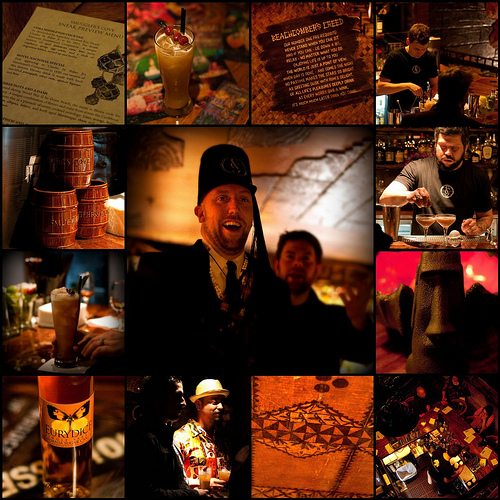
Every time we used to go to Alameda’s Forbidden Island, we sighed and wondered what it would take to convince its proprietor, Martin Cate, to open a bar like this closer to our house. It took a while, but our rum-soaked dreams have come true.
If anything, Smuggler’s Cove may turn out to be even more amazing than its East Bay cousin. Sure, there’s no outdoor patio (but really, given the shortage of sunny San Francisco days, I doubt we’d miss it), and the small space has the potential to get awfully crowded. But that wasn’t the case at last night’s media preview, where a handful of cocktail writers got the chance to sample five drinks out of the 80-plus offerings that the bar will serve come next Tuesday’s opening night.
What sets Smuggler’s Cove apart from the tiki pack is its focus on top-notch bartending talent (Martin’s gathered an enviable collection of West Coast heavy hitters), quality ingredients, and solid technique. It’s a serious rum-focused bar with retro-tropical decor, but there’s refreshingly little of the tongue-in-cheek cheesiness that you might expect. (Don’t get me wrong, I love me some ooga-booga. But I like a well-made, properly measured cocktail even more.)
And speaking of well-made cocktails, there were many to sample last night. A favorite of many guests, the Chadburn — rum, tawny port, pear liqueur, and a dash of Xocolatl Mole Bitters — takes its name from the gizmo that telegraphs changes in speed from the ship’s bridge to the engine room. The Hotel Nacional Special, which made its debut in 1939’s Gentleman’s Companion, combines pineapple, silver rum, apricot liqueur, and lime. Three more drinks — the frothy Cora Middleton, a spicy Three Dots and a Dash highball, and the island standby of J Wray & Ting — rounded out the night’s abbreviated menu.
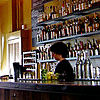
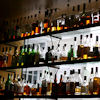
The space itself is a marvel. The main level features a one-man bar that’s as snug and seemingly as well-designed as a yacht, surrounded by a handful of barstools and two walls of rum, rum, and more rum (and a few select spirits). Overlooking the main bar, an inviting balcony area — decorated with the requisite thatch walls and colorful puffer-fish and net-float lights — clusters armchairs around tables made to resemble old rum crates. Down a flight of ship-like stairs, a larger bar — comfortable enough for two shakers and a barback — boasts an even-larger array of rums. A low-ceilinged sitting area manages to feel cozy rather than claustrophobic, in part due to a two-story water feature that rises back to the entry.
A series of sold-out friends-and-family preview nights are scheduled for this weekend, with opening night slated for next Tuesday, December 8. It’s sure to be difficult to get a seat for weeks to come, but I know that once the crowds die down a bit, we’ll be dropping anchor in this cove quite often.
Smuggler’s Cove
650 Gough Street
San Francisco, CA 94102
415.869.1900
bar culture, drinks
8 Comments »


Posted by Anita on 05.11.09 7:18 PM
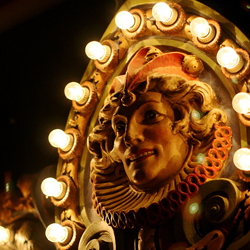 It’s hard to believe that in just two months — July 8 through 12 — we’ll be back in New Orleans for this year’s Tales of the Cocktail. Cameron and I are both participating in this year’s TalesBlog group, and {gulp} I’m moderating a Saturday-morning seminar called “Secrets of Cocktail Photography“.
TalesBlog is already up and running with previews of many of the interesting sessions, tasting rooms, events, and meals that make Tales the must-do event for anyone who loves cocktails. The contributor list is pretty much a Who’s Who of top cocktail bloggers, so it’s worth adding to your feed-reader even if you’re not planning to attend.
In other Tales-related news, host venue Hotel Monteleone is celebrating the 60th anniversary of the Carousel Bar, and they’re celebrating with a contest open to all bloggers. Here’s the gist: From 1949 until sometime in the late 60s or 70s there was a drink on the Carousel Bar’s menu called the Monteleone Cocktail. Unfortunately, the hotel folks have no idea what the exact recipe or ingredients were.
Here’s where you come in: Submit a recipe for your best idea for the new official Monteleone Cocktail. Entries will be judged by VIPs at the Carousel anniversary celebration on May 21. There are no requirements on types of liquor or style of drink, but all entries must be posted on your blog and emailed to the sponsors no later than May 18. (Send your drink recipe, along with your name, address, and phone number, to athornton@hotelmonteleone.com.)
The winning entry will become the new official Monteleone Cocktail, and the winner will receive four free nights at Hotel Monteleone during Tales of the Cocktail 2009.
bar culture, drinks, New Orleans, Tales of the Cocktail, travel
5 Comments »
Posted by Anita on 04.22.09 4:00 PM
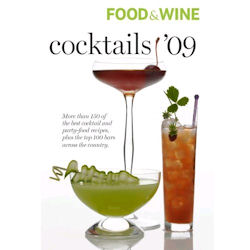 For the food-obsessed, there are a lot of exciting things that pop up in the spring. The first tender favas, skinny spears of asparagus, and fruit-tree blossoms that promise a sweet summer ahead. But in our circle of friends, there’s been another anticipation afoot: The long wait for the new edition of Food & Wine’s Cocktails annual.
You may recall our “Book Club” making visits to Range, Forbidden Island, and Bar Drake last year; in fact, our crew managed to hit every San Francisco bar listed in the 2008 edition, sampling a few gems amid a stunning number of failures. (Not to mention the many AWOL contenders; I wish we had a dollar for every time we heard “Oh, that? Nobody liked it, so we took it off the menu.” Sigh.)
When I crossed paths with the book’s compiler, Jim Meehan, at his NY speakeasy PDT, I gave him a fair bit of good-natured grief for our trouble. He allowed that the fleeting nature of drink recipes could be a bit of a problem, but assured me that big changes were in store for 2009, and seemed confident we would like the new direction he’d taken.
It’s still the same book — digest sized, with a clean and colorful layout. But in the biggest change from previous years, where chapters were organized by base spirit, this year’s book focuses on themed chapters: aperitifs, Latin drinks, seasonal drinks, frozen drinks, pitcher drinks, after-dinner drinks, classics, mixologists’ drinks, and mocktails. Each section has a patron bartender, who is briefly profiled and provides all the recipes. Bar celebrities like Jamie Boudreau, Julie Reiner, and (the book’s co-editor) Joaquin Simo take their turns, as do lesser-known mixmasters such as Jeff Grdinich.
The mixologists’ section is like a miniature version of previous editions of the book, a compilation of 18 drinks from top bartenders across the country. Although it’s hard to tell without actually mixing them, the drink recipes from San Francisco shakers — Absinthe’s Jonny Raglin, Neyah White of Nopa, and Jacques Bezuidenhout of Bar Drake — look great on paper. But better still, they come from bartenders who we know understand what works, not just in a highly controlled test-kitchen environment, but in everyday drink-slinging bars. It’s no surprise that some of the cocktails we liked best from last year’s Book Club came from these gentlemen; I can’t wait to give their recipes a test drive.
As before, there’s a directory of top bars listed in the back. This time, the list is explicitly titled “Top 100 Bars”, though they are not necessarily correlated to the included recipes. Frustratingly, other than hat-tips to chapter hosts, there’s no cross-reference to each establishment’s recipes by page number, a detail from past editions I will definitely miss. Cantina’s blurb, for example, mentions Duggan McDonnell by name, offering that “Many of his creations are featured in the Pitcher Drinks chapter (p. 94).” But Absinthe’s listing neither mentions Jonny Raglin, nor directs readers to his recipe on page 135, opting instead for a quizzical mention of Top Cheftestant Jamie Lauren.
As far as the local bars in the Top 100, there’s only a couple of quibbles. Everyone I’ve asked is surprised by the omission of Oakland’s lovely Flora, and it’s odd that Bar Drake didn’t make the cut this year when Jacques’ recipe did. Bix, however, is a total head-scratcher. Despite reviving the classic-cocktail genre a full decade before almost anyone else in town, this stalwart has long been eclipsed in both technical merit and outright hospitality.
The visuals, always a strength of this series, continue to impress. In addition to ace prop styling and eye-popping photography found in previous editions, this year’s version includes more infographics, which should help users navigate now that the book is not organized by spirit type. Graphics show ease of construction and base spirit, in addition to the glassware icon of the past editions. The front matter is perhaps a bit basic for experienced bar aficionados, although there is some good stuff about ice, must-have spirits, and best brands taste-test winners.
Do you need Food & Wine Cocktails ’09 in your bar library? Probably not. But at $10, it’s less than the price of a drink at nearly any of the places it trumpets, and it’s bound to be a fun souvenir of the way we’re drinking in the late aughts.
Bay Area bars/restaurants in the Top 100
There are 13 of them this year, which — for those of you keeping score at home — is more than any other city except NYC (home to 14). Mixologists mentioned by name in their establishment’s blurb are shown in brackets.
– Absinthe
– Alembic
– Beretta [Thad Vogler]
– Bix
– Bourbon & Branch
– Cantina [Duggan McDonnell]
– Clock Bar
– Elixir [H Ehrmann]
– Forbidden Island
– Heaven’s Dog [Erik Adkins]
– Nopa [Neyah White]
– Range
– Slanted Door
San Francisco cocktail recipes in the Mixologists’ Drinks chapter:
– Jonny Raglin, Absinthe
Villa Flores: jalapeno, tequila, egg white, grapefruit, agave, orange-flower water, Sichuan pepper garnish
– Neyah White, Nopa
Cherry Samba: cachaca, cherry Heering, Islay Scotch, lemon, simple, egg white
– Jacques Bezuidenhout, Bar Drake
Black Friar’s Pint: gin, cardamom-cinnamon Guinness, sherry, bitters, agave, egg white, cinnamon garnish
San Francisco recipes for Party Food:
– Warm Marinated Olives, Seasons Bar & Lounge
– Queso Fundido, Tres Agaves
– Polpette in Spicy Tomato Sauce, Beretta
And one San Francisco chapter host: Duggan McDonnell of Cantina
bar culture, Bay Area, books & media, drinks, restaurants
6 Comments »
Posted by Anita on 02.06.09 9:36 PM
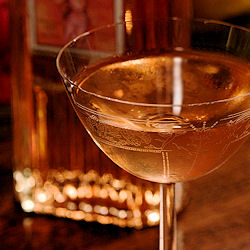 I know that it’s been awfully quiet around these parts for a while, but whirlwind trips to New York City will severely cut into your blogging time. The lovely folks at NOTCOT and Liqurious sent me on a hybrid photography/writing assignment to cover the launch of Rosangel, a new hibiscus-infused tequila from Gran Centenario.
You can probably guess that I don’t have a lot of personal affection for flavored spirits, but my better judgment prevailed: As freelance gigs go, getting to visit New York for a long weekend sure beats the hell out of just about anything else.
I fretted about how to make a rose-pink tequila sound credible to our cocktailian friends. But in all honesty, from what I was able to taste at the event, Rosangel has all the hallmarks of a quality product. It uses Gran Centenario reposado as its base, it’s aged for an additional 2 months in port casks to give it complexity and a rosy glow, and then it’s infused with hibiscus blossoms, not doctored with artificial flavors. I’m anxiously awaiting the chance to get my hands on a bottle to play with; the retail launch is set for March.
What I didn’t know when I accepted the assignment was that one of the events would be held at Clover Club, the newish Brooklyn bar from Julie Reiner of Flatiron Lounge fame. And, better still, that I’d have a chance to watch Ms. Reiner and Paul Pacult lead a hands-on immersion training for eight tequila-loving bartenders flown in from all around the country. (I won’t steal my own thunder any more than I already have: You’ll have to check out the NOTCOT post for the full scoop.)
So anyway, apologies for the radio silence. At least you know I had a good excuse! I promise there’s another post coming soon, all about the 70-pound pig we roasted for Cameron’s big birthday.

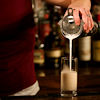
(Oh man, I shot so many frames… picking just five representative photos for the filmstrip this time is impossible! Please click through to see the whole collection.)
bar culture, drinks, NYC, other blogs
6 Comments »
Posted by Anita on 01.19.09 10:38 PM
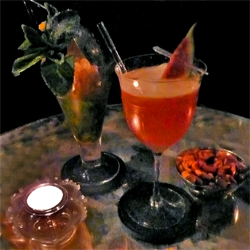 When you go to London, if you’re at all interested in the mixological arts, I recommend you bring an ample supply of cash, a large bottle of milk thistle, and a suitcase full of bubble wrap. Dear reader, they have so many wonders across the Pond that we only dream of Stateside.
First among these treasures is a plethora of eye-poppingly gorgeous (not to say purse-poppingly pricey) cocktail establishments. The exchange rate is lately favourable to the American drinker, as much as can be possible. But a list of cocktails priced at £16, or £18, or even a heart-stopping £26 a sniff is bound to set even the hardiest of world travelers back on her heels. It was only the Christmas holidays and the attendant closure of many of the Capital’s top watering holes that saved us from coming home skint.
One of the key reasons for the allure of said establishments — apart from their five-star decor and their world-class staff — is the ability for a colonial to sample libations that simply never make it to our shores. Rare malts! Esoteric liqueurs! Cuban rums! The mind reels at the possibilities of the drinks that could be shaken, if only one had access to such wonders. (Happily, one does. Although London’s spirits emporia are small in number, they’re rich in merchandise, easily discovered, and more than happy to abuse your charge card in exchange for some very fragile cargo for the return flight.)
One of the best drinks we enjoyed while in London married both of these two alluring elements, the fantastically beautiful bar and the enticingly rare ingredient.
 Aided and abetted by another London treasure, Jay Hepburn — proprietor of the spectacular blog known as Oh, Gosh! — we spent an evening taxing the hospitality of not one but two of London’s luxury-hotel lounges, the Bar at The Dorchester and Connaught Bar. Though our night at The Dorchester will forever remain a highlight of our London trip (due in no small part to the extraordinary welcome we received from our gregarious barman, Stefano, and his flawless drinks that kept us so enraptured that we missed the last train of the night!), the Connaught was a stunner.
It’s an opulent space, somehow embodying both splendid beauty and undeniably comfort. The staff are impeccable, gracious to a fault, and thoughtful to the utmost detail, from the first greeting to the last farewell. We were welcomed with a complimentary sip to enjoy while we perused the menu, then presented with a sheaf of recipes for the drinks we’d enjoyed at the end of the evening — an enchanting gesture that I hope will be the start of an international trend.
Though we savored many wonderful drinks that night, the final nod must go to the very first I tasted at Connaught Bar: a complex, spicy bit of exotica known as the French Sin. It’s not a simple drink to make, requiring a flavoured sugar, a barely seasonal fruit, a rare vermouth, and a carbonated tea infusion. Nevertheless, the rewards, as they say, are in the glass.
The French Sin also makes a perfect candidate for this month’s Mixology Monday: New Horizons, hosted by the anonymous Scribe of A Mixed Dram. Encouraged to sample a new spirit (amber vermouth, check!) or a new technique (carbonating tea — check again!), the French Sin covers all the bases. But if for some reason, you can’t be bothered to fizz your own tea, procure a bottle of rare vermouth, or infuse vanilla beans into sugar, never fear: The gentlemen of the Connaught Bar will be happy to oblige.
French Sin
– Connaught Bar, London
1/2 fresh fig
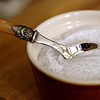
1/2T to 1T vanilla sugar
1-1/2 oz Armagnac
1/2 oz amber vermouth
3/4 oz lemon juice
3/4 oz rooibos spiced soda water
Muddle the fig in the shaker with the vanilla sugar, then add the rest of the ingredients — other than the spiced soda water — and shake with ice. Double-strain into a small goblet and top with rooibos spiced soda water, and stir briefly to combine. Garnish with a quarter of a fig.
—
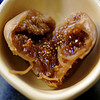
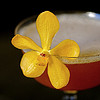
If figs are out of season, look for the freshest dried figs available. Rehydrate them in a small amount of hot (not boiling) water until soft enough to muddle. For garnish, use a lemon twist or a yellow flower, reminiscent of a vanilla orchid.
Vanilla sugar can be purchased in gourmet shops or spice stores — Penzey’s makes a nice one, as does Nielsen-Massey. To make your own, grind a half of a dry vanilla bean in a spice grinder or coffee grinder with a small amount of granulated sugar. Add this vanilla powder to 1 cup sugar and let sit at least 24 hours (and preferably up to a week) before using. In this recipe, you can use the sugar as-is, since you’ll be straining the shaken mixture, but in baked goods or as a general sweetener, use a fine sieve to remove the larger pieces of vanilla pod after the infusing is complete.
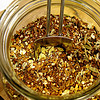
To make the rooibos spiced soda, steep 4 tsp spiced rooibos tea (or 1T pure rooibos tea plus a few cardamom pods, whole peppercorns, and cloves) in a quart of hot water for 5 minutes. Strain, chill thoroughly, and charge in a soda siphon.
bar culture, coffee & tea, London, Mixology Monday, recipes
8 Comments »
Posted by Anita on 11.21.08 11:14 PM
 I feel downright terrible that it’s taken me this long to tell you about the fabulous time we had last month in Seattle at Le Mixeur, the exclusive soirée organized by the Munat Bros, Ted & Charles. But in my defense, it’s taken me this long to figure out how to explain it without sounding like I’m bragging. Because, dear reader, saying Le Mixeur is a cocktail party is like calling the Titanic a boat: Technically accurate, but completely missing the point both in scale and impact.
We’d read about these fabulous shindigs, jealously drooling over tales of drinks created by some of the West Coast’s finest mixological masterminds. But somehow — despite having ingratiated ourselves to the Munats both at the Zig-Zag and at Tales of the Cocktail — we’d never managed to sync our travel plans to their social calendar. Eventually, we hit the jackpot, scoring an invite to Le Mixeur Cinq on a weekend when we had no other obligations; away we flew.
On our first night in Seattle, we dropped in on Keith Waldbauer skulking in his lair at Union, one of our all-time favorite Seattle dining spots. We’d read that Keith had contributed a recipe to the Mixeur menu, and we asked him to tell us about his inspiration for the drink that would be served to dozens — if not hundreds — of serious cocktailians the following night.
“Oh… you’re going to Le Mixeur?” he asked with a gleam in his eye. “You’ll have to tell me how my drink tastes. I just sent them a recipe and didn’t even try it.”
Was he pulling our leg? You never know with Waldbauer. No sir, you never know with a man like that.
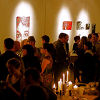
The next night, we made our way to a warehouse loft in SoDo, in the ominously empty streets bathed in the blue glow of Qwest Field. After climbing flight after flight of stairs, our efforts were rewarded. The white-walled loft opened out and up and away, revealing a happy hubbub. Our eyes darted from walls hung with eclectic art to the oh-my-god-impressive bar in the corner, where professional mixologists and a few determined amateurs shook and poured for the flowing crowd. In an open mezzanine above, the DJ nodded and smiled as the beat kicked in; a belly dancer took the floor, gyrating for the loudly appreciative audience.
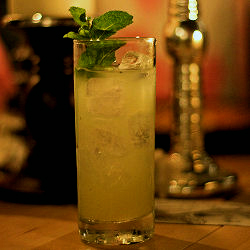
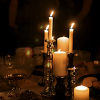
The bar was stacked deep and thick as folks studied the night’s menu and waited patiently. We quickly found Charles Munat, and weasled our way into a couple of drinks after what we later realized was a uniquely short interval. Happily, the crowd was full of plenty of friends, as well as many familiar faces from bars both near and far. And the gods of mixology obviously watch over fools and drunks, because Keith’s drink — a minty, gin-based, tall sour with a Chartreuse float, which he’d dubbed the Aristocrat Swizzle — was every bit as perfect as the setting.



Aristocrat Swizzle
– Keith Waldbauer
1-3/4 oz gin
3/4 oz lime juice
10 mint leaves
dash simple syrup
1 barspoon green Chartreuse
Muddle mint and syrup in a mixing glass. Add gin and lime juice, and shake with ice. Strain into an empty Collins glass, fill with crushed ice, and top with a Chartreuse float. Garnish with a sprig of mint.
bar culture, Drink of the Week, drinks, Seattle
2 Comments »
Posted by Cameron on 10.13.08 10:46 PM
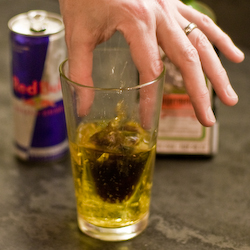 If there is a drink out there with fewer redeeming qualities than the Jäger Bomb, I can’t imagine what it is. Seriously folks, this drink is a bad idea. It tastes like cough syrup, it’s loaded with sugar, it packs enough caffeine to instantly add fifty points to your heart rate, and one of the main ingredients is made entirely of industrial chemicals.
And so, in honor of Stevi’s Mixology Monday topic, Guilty Pleasures, I’m horrified to share with you that I’m completely, utterly addicted to the Trailer Trash Speedball, the Turbojäger, the Flying Hirsch, La Perla Negra: The Jäger Bomb.
I picked up this dirty little habit during my tour of duty as a guitar player for Seattle-area cover band Bad Alibi. For the first three months, I was fastidious about not drinking during performances. To tell the truth, for the first month, I was too panicked to even think about trying to play with a buzz on, which amused my band mates tremendously. They rarely got out of control, but every set was accompanied by beer and, to tell the truth, if our drummer wasn’t stoned, he couldn’t keep time at all.
Before the third and final set of the evening, one of the Alibi Boys would usually buy a round of Jäger Bombs. At first I declined to take part in the toxic trainwreck, but eventually I thought, “Don’t knock it if you haven’t tried it.â€
Like any destructive obsession, ritual is an important part of the Jäger Bomb. A shot of Jägermeister, an herbal liqueur, is served next to a pint glass containing half a can of Red Bull energy drink. You drop the shot glass into the pint glass and chug the mixture. Think of it as a millennial boilermaker.
As I climbed back on stage after my first ever Jäger Bomb, I immediately understood the appeal. Our third sets usually ran from midnight to 1:45am. Fridays weren’t too bad, but we always played two nights in a row and the third set on Saturday could be tough. No matter how big the crowd was, by 12:30, the entire room was completely blasted. By 1am, the energy would start to fall off, and by 1:30, the only people upright were usually us and the bar staff.
This is all by way of saying that if you run around playing high voltage rock and roll late at night, the Jäger Bomb starts to make a lot of sense. One produces a high, fine, jittery feeling, and two will definitely get your motor running. Drink three in quick succession and you might as well hand the bartender your credit card and have them call the cops now, just to save time.
After about a year and a half of playing 5 hours a night, 2 nights a week, 3 weekends a month in roadhouses anywhere from 45 minutes to 2 hours outside the city, all while holding down a full time corporate day job, my attitude towards rock godhead changed. The crowds were getting smaller, the drives were getting longer, and there is absolutely nothing fun about breaking down the stage at 2am. When I left the band, I mostly stopped drinking Jäger Bombs, as it’s not the sort of thing that you order in polite company.
But every now and then I let the inner Neanderthal come out to play. I drop the shot into the glass, and fire back the mixture. As the tight rush crawls up my spine, I close my eyes and remember when the lights flashed, the fog billowed, and—with one foot on the monitor and a snarl on my lips—I delivered the mighty rock thunder to a sea of dancing hooligans.




Jäger Bomb
4oz of energy drink (roughly 1/2 can of Red Bull)
1 shot Jägermeister
Pour the energy drink in a pint glass. Drop the shot in the pint glass and drink the whole mess down. Rock on.
bar culture, Drink of the Week, drinks, Mixology Monday, recipes, Seattle
13 Comments »
Posted by Anita on 08.20.08 5:35 PM
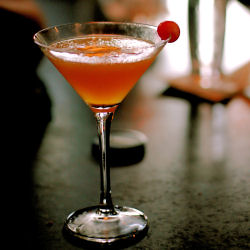 As our book club sips its merry way around the City, we’re discovering quite a few cocktails that we really like. Try as we might to work up enthusiasm for the drinks we’ve intended to sample, more often than not we actually become quite captivated by another option on the menu.
Such was life the other night at the bar at Range, where we’d gone to sample the Green Lantern, their contribution to Food & Wine Cocktails 2008. It’s an interesting enough drink, and if you hadn’t told me the lurid green came from muddled kiwifruit, I probably would have been stumped.
But the highlight of the evening was two pleasant surprises behind the bar: A newly-shorn Carlos Yturria — who, much to everyone’s pleasure has taken the Wednesday shift alongside the ever-fabulous Brooke — and the reappearance of a summertime favorite on the drinks list. The stalwart known as the Sungold Zinger has graced Range’s warm-weather cocktail menu since the restaurant’s earliest days, and its fan club is legion.
Jen ordered one, served by the man who invented it. Then Fatemeh followed, and then me, and then Cameron, and pretty soon there was a line down the bar of these sharp-looking, vibrant-orange cocktails. Well-balanced, tangy but not too tart, it’s a simple but beguiling combination… the kind of drink you wonder why nobody invented before. Everyone who tasted it had to have one of their own; we were totally smitten. And, apparently, we’re not alone: the Sungold Zinger was chosen one of the 20 best cocktails in America by GQ magazine.
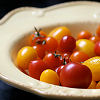
It’s a simple enough recipe to make at home, especially when Sungold tomatoes are at their peak, as they are right now. But if you’re anywhere near Range — especially on a Wednesday night when Carlos is around — drop in for a little sip of summer sunshine.

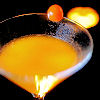
Sungold Zinger
3-4 Sungold tomatoes
Pinch of sea salt
1/2 oz agave syrup
1/2 oz lemon juice
1-1/2 oz 209 gin
Muddle the tomatoes, salt, and syrup together in a mixing glass. Add lemon juice and gin, and shake well with ice. Strain into a chilled cocktail glass, and garnish with another tomato on the rim.
Variation: Replace the agave syrup with an equal amount of St-Germain elderflower liqueur, a nice alternative if you want a little floral hit.
(leftmost filmstrip photo courtesy of book-club member *fatemeh* via CreativeCommons)
bar culture, Drink of the Week, drinks, recipes, restaurants, The Mission
14 Comments »
Posted by Anita on 08.11.08 12:07 PM
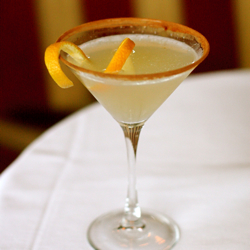 The Bay Area is home to so many fabulous local spirits that it seems almost impossible to single any of them out for special attention. For gin alone, we’ve got 209 and Junipero right here in the City, and Sarticious over the hill in Santa Cruz. We’re close to two top-tier artisan vodka companies — Charbay in Napa and Hangar One on Alameda — both of which also make a variety of other liquors and liqueurs, including St. George Absinthe and Single-Malt Whiskey, and Charbay Rum and Pastis. We’ve got a local brandy-maker, an old-school whiskey distiller, and even a bierschnapps haus.
But honestly, San Francisco’s best local drinking resource may be its bumper crop of creative mixologists. As Camper pointed out (and I keep harping on at every chance I get), Food & Wine Cocktails 2008 includes an unmatched 17 recipes from SF’s watering holes. The bartenders in our City aren’t just great at mixing up other peoples’ recipes, they’re tops at creating new drinks, too.
San Francisco’s bragging rights as a cocktail-creation mecca can be traced to an illustrious heritage, arguably starting with Jerry Thomas‘s 1880s invention of the Martinez, running through the 1920s with Duncan Nicol’s creation Pisco Punch, and Trader Vic’s Bergeron‘s (oft-disputed) introduction of the Mai Tai in 1944. And — just as today — the City’s always been full of canny restaurateurs popularizing drinks that were invented elsewhere, bringing signature drinks like Irish Coffee to the masses.
All by way of saying: This month’s episode of Mixology Monday — Local Flavors, hosted by Kevin at Save the Drinkers — has got our name all over it.
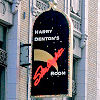
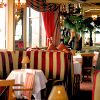
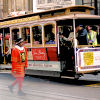
Now, I’m generally not a fan of tampering with the classics. But here’s one exception: The Cable Car, a clever Sidecar variation with a decidedly local angle. Created by Tony Abou-Ganim in 1996, the drink became the signature cocktail at Harry Denton’s Starlight Lounge, the iconic nightclub perched at the top of the Sir Francis Drake hotel “between the stars and the cable cars”. The Starlight’s specialty drink menu leads off with the Cable Car to this day… no mean feat in a town where cocktails are forgotten before the publicity even hits the presses.
So the Cable Car’s got a good back-story, and a gorgeous home bar. But how’s it taste? Frankly, the sample we sipped last weekend was unworthy of its lofty setting, not to mention its illustrious pedigree. Captain Morgan may be the 900-pound gorilla in the spiced-rum category (not to mention a pop-culture icon), but he’s no friend of my palate. And really, a drink with its roots in France deserves a better orange liqueur than Marie Brizard. I know it gets busy at the Starlight, but I’d like to think that the cocktail world has evolved past the point where a reputable bar resorts to sour mix, even its own house-made stuff.
So let’s bring this one a little closer to today’s standards: Fresh lemon juice, quality rum, a dash of real spice, and a top-shelf orange liqueur. A true San Francisco treat.

Cable Car Deluxe
– inspired by Tony Abou-Ganim‘s modern classic
1-1/2 oz gold rum (such as Appleton V/X)
scant 1/4 tsp allspice dram
3/4 oz Grand Marnier
1 oz lemon juice
1/2 oz simple syrup (highly optional)
Shake with ice, and strain into a chilled, cinnamon-sugar-rimmed cocktail glass. Garnish with an orange or lemon spiral.
———————-
Other featured cocktails with a San Francisco twist:
- Bee’s Knees – Our version, made with 100% local ingredients
- The Soiree – SF Cocktail Week’s signature drink for 2008
- Martinez – Jerry Thomas invented it here in San Francisco
Drink of the Week from our local bars:
bar culture, Bay Area, downtown SF, Drink of the Week, drinks, locavore, Mixology Monday, recipes
8 Comments »
Posted by Anita on 07.18.08 6:36 AM
 Few of our friends can believe that two people as obsessed with food and drink as we are have never been to New Orleans before. But it’s true: This week is our inaugural — although I think it’s safe to say definitely not our last — adventure in the City that Care Forgot.
When Cameron mentioned at poker night last week that we were heading to New Orleans, our friend Dave’s eyes lit up. If there’s a San Franciscan who loves NOLA more than Dave, I sure don’t know him. He and his crew of roving debauchés have made their way to the Crescent City at least once a year for the past 11 years.
He sent us a 1,000-word-plus email, jammed with his favorite places and treats, devoting an entire paragraph (after 10 others on more-obscure offerings) just to the touristy French Quarter food & drink experiences that are actually worth the trouble:
“Get a cafe au lait and beignets at Cafe du Monde! Eat a muffaletta from Central Grocery on Decatur Street! Shoot oysters at Acme Oyster House! Get late-night eats and abuse from flaming waiters at Clover Grill! And drink a Pimm’s cup at Napoleon House bar!”
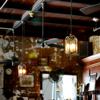
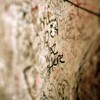
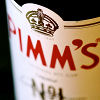
So, never one to pass up good advice, we hopped over to Napoleon House for lunch yesterday. We sat ourselves down amid glorious decrepitude and a century’s worth of graffiti, and ordered up a round of Pimm’s, a half a muffaletta, and a roast-beef po’boy. Ancient ceiling fans rotated overhead as bow-tied waiters shuttled between table, bar, and patio. Mid-meal, our Seattle cadre wandered in from the sidewalk swelter, followed closely by a friend from the other side of the continent. No fools, these drinkers: It was Pimm’s for everyone; tall, cool, and fast.
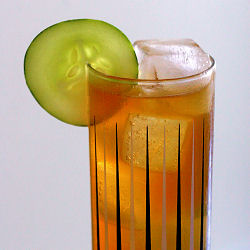
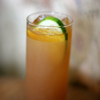
The Pimm’s Cup is our entry for this month’s Mixology Monday — aptly honoring the fine city of New Orleans, and even more aptly hosted by MxMo’s founder, Paul of Cocktail Chronicles. Now, frankly, I’m not sure how this quintessential English picnic drink became such a New Orleans standard. But if there were a Jeopardy! category called “Drinks of the Big Easy”, it’d be right there in the middle of the board, below the Hurricane, the Ramos Fizz, and the Sazerac, but above the Vieux Carre, the Obituary, and the La Louisiane. No matter the reason for its iconic status, it’s certainly a long, cool refresher that makes a potent antidote to the sticky New Orleans weather, and it’s known as a respectable option for daytime drinking… a pastime in which the Crescent City excels.
Pimm’s Cup
– Napoleon House, New Orleans
Food & Wine Cocktails 2008
1-1/2 oz Pimm’s No. 1
2-1/2 oz fresh lemon juice
1 oz simple syrup
1-1/2 oz chilled lemon soda (preferably French-style ‘lemonade’, but 7up will do)
cucumber wheel, for garnish
Add the Pimm’s, lemon juice, and simple syrup to a cocktail shaker. Add ice and shake well, straining into an ice-filled colling glass. Stir in the soda, and garnish with the cucumber wheel.
bar culture, Drink of the Week, Mixology Monday, New Orleans, recipes, Tales of the Cocktail
19 Comments »
