Posted by Anita on 05.21.11 11:06 AM
 Rhubarb when raw is so tough
And its leaves contain poisonous stuff,
– But when cleaned and de-soiled
– Dipped in sugar and boiled
Then the stalks are quite tasty enough.
– — The Rhubarb Compendium
—-
This month’s CanJam challenge — hosted by Toronto Tasting Notes — offers not one but two options for us to put up: Asparagus or rhubarb. Given that I’d used the former in last month’s project (the theme was herbs, and I made tarragon asparagus pickles), my path was clear.
I know that some of my friends (including both of the people who I consider my pie gurus) will disown me when I admit this, but I’m not generally a fan of rhubarb’s texture; I just can’t tolerate the usual sliminess. I love its tart fruitiness, so I’ve learned a trick or two for keeping it firm in desserts, but canning it in a water bath — the whole point of the CanJam — would undo all of those careful preparations.
But there are a few preserves, like flavored syrups, where the pulp of the fruit (or vegetable, in this case) is strained out, leaving just the juice and its flavor behind. Best of all, syrups are simple to preserve, and they’re a compact way to save the flavors of seasonal produce for enjoyment throughout the year. You can also freeze syrups, if — unlike me — you’ve got the space to safely stash a glass bottle.
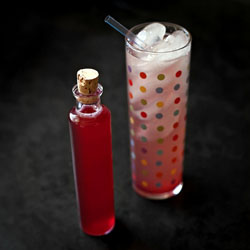
You can use this flavored syrup any place a sweet-spicy-sour touch would be welcome, something as simple as brushing it onto a cake, or diluting it with sparkling water for a homemade soda. To my mind, its perfect use is making a pink variation on the venerable summer drink known as the Paloma (or even a virgin variation, sans tequila).
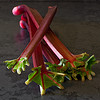
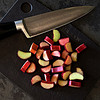
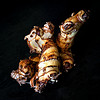
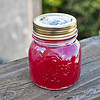
Rhubarb-Ginger Syrup
– makes 1 jar to keep, plus a little to use right away; can easily be doubled or tripled
1.5 cups white sugar
1 cup water
2 cups thick-sliced rhubarb stalks, leaves discarded
1 cup chopped ginger (no need to peel)
Prepare canner (or a saucepan deep enough to cover the jar by 3 inches), plus a small jam jar and its lid, according to the usual method; keep jar and lid hot until needed.
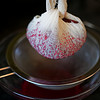
In a medium saucepan, bring the sugar and water to a simmer, stirring to dissolve. Add the rhubarb and ginger; return to a simmer, then reduce heat and let slowly bubble until the rhubarb is thoroughly soft. Remove from heat and let steep for 30 minutes. Meanwhile, line a metal strainer with cheesecloth, and place it over a heatproof bowl. (If you want crystal-clear syrup, use a muslin jelly bag and be prepared to wait for gravity to draw the liquid into the bowl; be careful not to press or squeeze the solids.)
Bring the strained syrup back to a simmer, then pour into the heated jar, leaving 1/2-inch headspace. Wipe rim and center lid on jar. Screw band to fingertip-tight.
Place jar in canner. Bring to a boil; process covered for 5 minutes. Remove lid, wait 5 minutes, then remove jar. Cool, check seal, and store in a cool, dark place.
—-
 La Paloma Rosada
1.5 to 2oz blanco tequila
1/2 oz rhubarb-ginger syrup
grapefruit bitters
tart grapefruit soda (such as Izze Grapefruit)
Fill a Collins glass with ice. Add the tequila and syrup; fill with grapefruit soda, and give a good stir. Top the ice with a few shakes of bitters.
CanJam, drinks, preserving & infusing, recipes
13 Comments »


Posted by Anita on 12.10.10 1:48 PM
 This month’s final CanJam theme — dried fruit — had me kicking the walls. I don’t really enjoy the texture of dried fruit, and given that it’s already preserved, it seems redundant to can it.
But our hostess, Tigress, set naysayers’ minds at easy, allowing that even a small amount of the featured ingredient was acceptable. With that in mind, I went back through the files to find a way to preserve a seasonal fresh ingredient with just a touch of dried-fruit flavor.
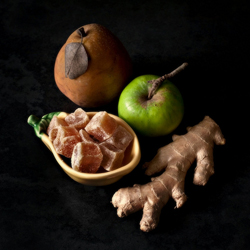
While looking through recipes for last month’s pome-fest, my runner-up candidate sounded so good that I put it aside, knowing I’d want to make it some other time. Calling for both dried currants and candied ginger, it definitely fits the bill for this month’s CanJam.
If you, like me, can’t get enough of ginger’s piquant flair, you’ll be happy to see that this recipe calls for ginger in three forms — fresh, candied, and ground — for a triple dose of sweet heat. The original recipe-writer calls this preserve a chutney, which it technically is, given the onions and vinegar. But the resulting texture is more like a savory compote or chunky pear-applesauce hybrid than the sticky, almost-chewy texture most of us associate with chutney. It’s delicious, of course (just look at that ingredients list… how could it not be?), but I felt a name-change was in order.
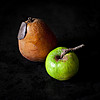
If your pears are thin-skinned and relatively free of blemishes, you may want to leave them unpeeled, to give the preserve a more rustic texture and color. If you prefer a smoother, lighter-colored preserve, do peel them. Note too that I’ve halved the original recipe’s quantities, so doubling the quantities below to make a 6-jar batch should be trouble-free.

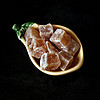

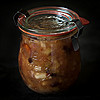
Savory Triple-Ginger Pear Preserves
– adapted from Chow Times
3 cups peeled (if desired), cored, and diced pears, mixed varieties
1/2 cup peeled, cored, and diced tart apple
1/2 cup chopped onion
1/4 cup minced candied ginger
1/4 cup seedless sultanas or dried currants
5oz apple cider vinegar
1/2 cup raw sugar or light brown sugar
1 clove garlic, sliced
1/2 T grated fresh ginger
1/4 tsp salt
1/4 tsp red pepper flakes
1/4 tsp ground dried ginger
Prepare canner, lids, and three 8-oz jars according to the usual method; keep jars hot until needed.
In a medium saucepan, heat all ingredients except pears, and bring to a boil over medium-high heat. Reduce heat to medium-low and simmer uncovered for 30 minutes, stirring occasionally.
Add the pears and bring to a boil over medium-high heat. Reduce heat again to medium-low and simmer until the desired consistency is reached, about 30 minutes depending on simmering speed, stirring occasionally at first but more often as you come closer to the end. The mixture is ready when it easily holds together and no excess liquid appears when parted with a spoon.
Using a stainless-steel canning funnel, ladle preserves into hot jars, leaving 1/2-inch headspace. Remove air bubbles using a plastic knife or chopstick, and readjust headspace as needed. Wipe jar rims with a clean, damp cloth and center the hot lids on jars. Screw band to fingertip-tight.
Place jars in canner, ensuring they are completely submerged. Bring to a boil and process covered for 10 minutes. Remove canner lid; wait 5 minutes, then remove jars. Cool thoroughly, check for seals, and store in a cool, dark place for up to a year.
CanJam, locavore, preserving & infusing, recipes
6 Comments »
Posted by Anita on 11.19.10 12:41 PM
 The Cosmic Cowgirl picked pomes — that’s apples, pears, and quinces to you and me — as the theme of this month’s CanJam. As I dreamed of making mebrillo, pear butter, and dozens of other suitable recipes, I sat at the window overlooking our garden, still groaning with tomatoes. They’re ripening slowly now, and it’s time to plant our winter crops; a green tomato preserve was what I really needed to tackle before I gave any thought to recreational canning.
As interesting as it seemed, we never made much of a dent in the green tomato jam I made around this time last year. It’s finally dawning on me that our capacity for sweet preserves is fairly limited, so I knew this year’s project would have to be savory. I hit the books, and came up with a few ideas for pickles and such, but nothing that really made me want to pull out the canner. Then, while browsing on a completely unrelated topic, I serendipitously encountered a recipe for a green tomato and apple chutney. Voilá — two birds, one stone.
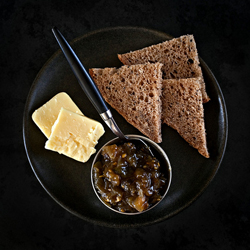
I love a nice, tidy solution, but experience has taught me that my effort’s wasted if I preserve something nobody wants to eat. That won’t be a problem this year: Barely an hour after the lids went ‘ping!’, we’d already polished off one small jar of this piquant preserve, slathered on good brown bread with hunks of aged cheddar to make a thoroughly autumnal ploughman’s lunch. A few days later, we cracked another jar and gobbled up a good share of it alongside an Indian curry. And just last night, Cameron sighed as he wondered aloud how well it would go alongside the Thanksgiving turkey, in place of the cranberry sauce that neither of us really craves.
I find myself in the odd position of hoping that the weather turns cold soon, so that the last of this year’s tomatoes won’t ripen and I’ll have another batch of green fruit to transform into chutney. If not, at least I know what I’ll be doing with the tail end of next year’s crop.
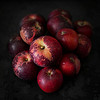
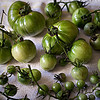
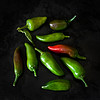
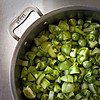
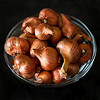
English-style Spicy Green Tomato & Apple Chutney
– adapted from BBC Food
1/2 oz fresh ginger (about a 2-inch piece)
8 to 10 fresh hot chiles, halved but not seeded
4 pounds green tomatoes, chopped
1 pound apples, peeled, cored, and chopped
4 oz golden raisins, chopped, or dried currants (or half of each)
1 pound shallots, chopped
2 tsp kosher salt
1 pound raw sugar or light brown sugar
1 pint malt vinegar
Prepare canner, lids, and nine 8-oz jars according to the usual method; keep jars hot until needed.
Bruise the ginger and tie it into a muslin jelly bag with the chiles.
Place jelly bag and the remaining ingredients in a Dutch oven or other large, wide pan. Bring to a boil, stirring until the sugar has dissolved, and simmer until the desired consistency is reached, about an hour depending on simmering speed, stirring occasionally at first but more often as you come closer to the end.
Remove the jelly bag. Using a stainless-steel canning funnel, ladle the chutney into hot jars, leaving 1/2-inch headspace. Remove air bubbles using a plastic knife or chopstick, and readjust headspace as needed. Wipe jar rims with a clean, damp cloth and center the hot lids on jars. Screw band to fingertip-tight.
Place jars in canner, ensuring they are completely submerged. Bring to a boil and process covered for 15 minutes. Remove canner lid; wait 5 minutes, then remove jars. Cool thoroughly, check for seals, and store in a cool, dark place for up to a year.
CanJam, locavore, preserving & infusing, recipes
9 Comments »
Posted by Anita on 10.22.10 5:27 PM
 Kaela at Local Kitchen chose chile peppers as this month’s CanJam theme. Salsa seems the obvious choice, but having just put up an amazing fire-roasted salsa negra less than two months ago, our pantry was already fixed for Mexican sauces. We don’t use many pickled peppers, and we’ve already got many jars of our favorite tomatillo-based salsa verde put up for the fall.
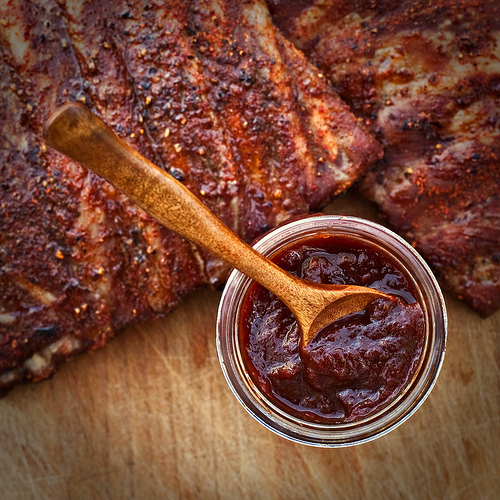
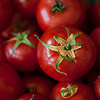
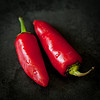
Flipping through my favorite canning books, I found a few likely candidates in the hot-pepper genre. But too many of these used chiles as a grace note rather than an actual main ingredient — and I wanted the chiles’ flavor to play a starring role. In the end, our bountiful supply of (finally!) ripe tomatoes tipped the scales toward this barbecue sauce; finding fresh Fresno chiles in our Mariquita Farm mystery box clinched it.
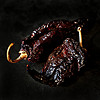
Unlike the sorts of fancy regional-style barbecue sauces I like to make for most of the meats that come out of our smoker, this recipe yields a spicy variation on straight-up all-American BBQ sauce. Cameron described it as “like the stuff you’d get out of a bottle, but really really good.” And he’s right; there’s a familiar tangy sweetness, intensified by the slow burn that comes from a triple dose of chile — fresh, dried, and ground.

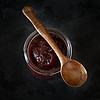
 Ancho Chile Barbecue Sauce
– adapted from Blue Ribbon Preserves
4 quarts peeled, cored, and chopped ripe tomatoes
2 cups chopped onion
1-1/2 cups seeded, de-ribbed, and chopped red bell peppers
1 cup chopped celery
4 fresh hot red chile peppers, such as Fresnos, seeded and finely chopped
2 to 4 dried ancho chile peppers, stemmed and seeded
3 cloves garlic, minced
8 whole black peppercorns
1-1/4 cups firmly packed dark brown sugar
1 cup red wine vinegar
1/2 cup barley malt syrup (or dark corn syrup)
2 tsp kosher salt
2 tsp dry mustard
1 tsp hot red pepper sauce (Tabasco-style)
1/2 tsp ground ancho or red chile, or to taste
Prepare canner, lids, and seven 8-oz jars according to the usual method; keep jars hot until needed.
Toast the dried chiles in a skillet, pressing down gently to flatten and soften, just until they become pliable and fragrant.
Combine the tomatoes, onions, bell peppers, celery, fresh chiles, toasted dried chiles, and garlic in a large, wide Dutch oven. Bring the mixture to a boil over medium heat, stirring to prevent scorching. Reduce heat and simmer until the vegetables are soft and the tomatoes broken down, about 30 minutes, stirring frequently. Remove the pan from the heat.
Press the mixture through a food mill or a sieve — don’t use a blender or food processor here, because you don’t want to introduce air into the mixture. Return the sauce to the pan and simmer, stirring occasionally, until the mixture is reduced by half and will mound up gently on a spoon, about 45 minutes to an hour.
Tie the peppercorns in a spice bag or tea infusion ball, and add it to the mixture in the pan. Add the brown sugar, wine vinegar, malt syrup, salt, paprika, mustard, hot sauce, and ground red chile to the tomato mixture, stirring well after each addition. Simmer gently for 1-1/2 hours, or until the mixture is the consistency of ketchup. You will need to stir more frequently as the sauce thickens, to prevent scorching. Remove the pan from the heat and discard the spice bag. Taste and add additional ground red chile if desired.
Using a stainless-steel canning funnel, ladle the sauce into hot jars, leaving 1/2-inch headspace. Remove air bubbles using a plastic knife or chopstick, and readjust headspace as needed. Wipe jar rims with a clean, damp cloth and center the hot lids on jars. Screw band to fingertip-tight.
Place jars in canner, ensuring they are completely submerged. Bring to a boil and process covered for 15 minutes. Remove canner lid; wait 5 minutes, then remove jars. Cool, check for seals, and store in a cool, dark place for up to a year.
CanJam, preserving & infusing
6 Comments »
Posted by Anita on 09.17.10 10:57 PM
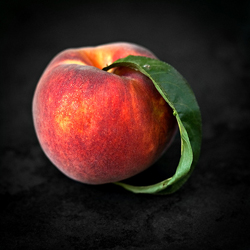 I have a great story to tell you about the peach preserves I made for this month’s CanJam — the theme of which is stone fruit — hosted by The Hip Girl’s Guide to Homemaking. But work has managed to sap every last ounce of my attention this week, and it’s already 11pm. Making matters worse, the hard-and-fast deadline for the CanJam roundup means this post must go up no later than midnight tonight. Time, it seems, is not on my side.
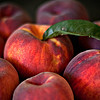
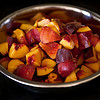
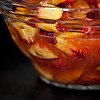
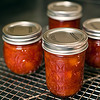
So you’ll just have to trust me when I say that the peaches we bought — the deep, aromatic, and complex-flavored ‘Oh Henry’ variety from Woodleaf Farm — were so damned perfect that we couldn’t bear to embellish them with the fancy ingredients we had originally planned to use. Instead, we turned to a formula that I learned years ago from preserves maven June Taylor, a simple recipe that lets the taste of the fruit shine.
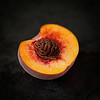
We also wanted to preserve the deep blush of the peaches, so we didn’t peel our fruit before jamming. And truthfully, unless your peaches have problem skin, we recommend just giving them a quick rinse in cool water and drying them with a towel. Peeling is a pain in the neck, and you won’t notice the difference in the final preserve.
Perfectly Simple Peach Preserves
– adapted from June Taylor
 3 pounds pitted ripe peaches
– rinsed, dried, and cut into bite-sized pieces
10 oz white sugar*
2-1/2 T lemon juice
1 T orange zest
4 8-oz canning jars and lids
Prepare canner, lids, and jars according to the usual method; keep jars hot until needed.
Toss together the ingredients in a non-reactive bowl and let sit, covered, overnight to allow the peaches to soften and release their juices.
Transfer the macerated fruit and juices into a heavy, wide stainless-steel pot, and bring to a boil, stirring as necessary. After the mixture comes to a boil, reduce heat to maintain a steady simmer; stir frequently to distribute the mixture and prevent burning.
Actual cooking time will vary depending on the fruit’s moisture level and the speed of your simmer. Most batches are done at between 20 and 25 minutes; you don’t want to simmer longer than 30 minutes or the sugars will begin to caramelize.
As the mixture approaches a sauce-like consistency, stir constantly to prevent scorching. To test for proper gel, use the saucer test or watch for the liquid to sheet off the edge of a metal spoon.
When the preserves have reached the proper set, remove from the heat. Working quickly, ladle into hot prepared jars, leaving 1/4-inch headspace. Remove air bubbles and adjust headspace as needed. Wipe rims and center lids on jars; screw band to fingertip-tight.
Place jars in canner, ensuring they are completely submerged. Bring to a boil and process jars for 10 minutes with the canner lid on. When time is complete, remove canner lid and turn off heat; wait 5 minutes, then remove jars. Cool, check for seals, and store in a cool, dark place for up to 6 months.
—
* Sugar can and should be adjusted depending on the fruit’s level of sweetness and your own taste. The sweetest fruit will require a ratio of 5.5 pounds of prepared fruit to 1 pound of sugar; the least-sweet fruit will be closer to 4:1.
CanJam, locavore, preserving & infusing, recipes
7 Comments »
Posted by Anita on 08.20.10 6:06 PM
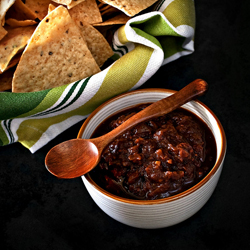 When life gives you lemons, as the saying goes, make lemonade. When life — or, in this case, a distracted farmer — gives you under-ripe tomatoes, make salsa.
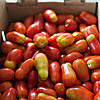
I’d ordered 40 pounds of San Marzano tomatoes from my favorite farm, planning to use some for my contribution to this month’s CanJam — hosted by What Julia Ate — and to pressure-can the rest for this winter’s cooking.
But when I got home and opened the crates, my heart sunk. I’d gotten two whole cases of tomatoes that ranged from rock-hard-green to just-barely-red, with the vast majority in the not-really-ripe category.
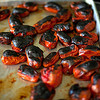
Already up to my ears in green-tomato jam from last season’s garden, I really didn’t want to go that route again. Happily, I remembered — no doubt from some wise Rick Bayless recipe — that the judicious application of heat helps less-than-perfect tomatoes become something better than they ought to be. Roasting tomatoes under a broiler gives them a soft, smoky sweetness, making them the perfect base for sauces and salsas.
The most appealing canner-ready recipe I found for roasted tomato salsa calls for a mix of dried chipotles and cascabel chiles. Having neither on hand, I opted for a mix of locally grown guajillos and some chilhuacles de oaxaca left over from a mole-making adventure. (Although you shouldn’t generally tinker with canning recipes, this kind of one-to-one substitution is fine, so long as the ingredients have the same acidity and moisture levels as the ones they’re replacing.)
The resulting salsa is a mix of bright acidity and smoky complexity, garlicky and rich with chile flavor. It’s definitely the best tomato salsa I’ve ever canned, and a great change from our usual tomatillo salsa. And although I seriously hope I’m never confronted with another case of under-ripe tomatoes, at least I now know exactly what to do with them.
Fire-Roasted Salsa Negra
– adapted from the Ball Complete Book of Home Preserving
Makes eight 8-oz jars or four pint jars
 24 dried chile peppers, such as chipotle, guajillo, ancho, etc.
2 cups hot water
3 pounds ripe plum tomatoes
2 large mild to medium-hot green chiles, such as Anaheims (or bell peppers, if you prefer)
2 small onions
1 head garlic, broken into cloves but not peeled
2 tsp white sugar
1 tsp salt
1 cup white vinegar
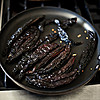
Preheat your broiler. Meanwhile, toast the dried chiles in a large, dry skillet over medium heat, about 30 seconds per side, until they are softened and fragrant. Transfer softened chiles to a heatproof bowl and cover with the hot water, weighing down with a saucer or small plate to keep chiles submerged. Soak the chiles for 15 minutes.
Working in batches, transfer soaked chiles and some of their soaking liquid to a blender; puree until smooth. Taste the puree; if you find it bitter, press the puree through a mesh strainer or sieve with a wooden spoon. Continue pressing and scraping until you’re left with a dry lump of seeds and bits of skin with no flesh attached.
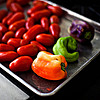
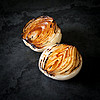
Meanwhile, roast the tomatoes, peppers, onions, and garlic under the preheated broiler, turning to roast all sides. When the tomatoes and peppers are blistered, blackened, and softened, and the onions and garlic skins are blackened in spots, remove them from the broiler; this usually takes anywhere from 10 to 20 minutes, depending on the age of your vegetables and the strength of your broiler. The garlic will likely need to come out before other vegetables are done, so keep tongs handy.
Set tomatoes, onions, and garlic aside to cool. Place the peppers in a paper bag and roll the top closed tightly; set aside. Peel and chop all of the vegetables as they become cool enough to handle.
Prepare canner, lids, and jars according to the usual method; keep jars hot until needed.
In a large, stainless-steel saucepan, combine reserved chile puree, chopped roasted vegetables, sugar, salt, and vinegar. Bring to a boil over medium-high heat, stirring constantly. Reduce heat and simmer, stirring frequently, until slightly thickened, about 15 minutes.
Ladle hot salsa into hot jars, leaving 1/2-inch headspace. Remove air bubbles and adjust headspace as needed. Wipe rims and center lids on jars; screw band to fingertip-tight.
Place jars in canner, ensuring they are completely submerged. Bring to a boil and process 8-ounce jars for 15 minutes and pint jars for 20 minutes with the canner lid on. When time is complete, remove canner lid and turn off heat; wait 5 minutes, then remove jars. Cool, check for seals, and store in a cool, dark place for up to a year.
CanJam, locavore, preserving & infusing
20 Comments »
Posted by Anita on 07.23.10 8:13 PM
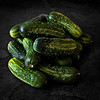
 I’ve always wanted to make real kosher dill pickles, the kind that our grandparents might have bought from a barrel at their local dry-goods shop. Like sauerkraut or kimchee, these pickles get their sourness entirely from the fermentation process rather than the vinegar found in many pickle recipes.
With the crazy spring weather we had this year, it’s still rather early here for cucumbers, but the CanJam challenge — hosted by Gloria at Laundry Etc. — waits for no woman. The biggest cukes in our garden are barely longer than my thumb, and though I’d dearly love to make cornichons, we don’t yet have enough yet to fill even a single jar.
Persian and Asian cucumbers are abundant at the Ferry Plaza market already, but search as we might, we came up empty for pickling varieties like Kirby from any farm-direct sources. After scouring our local co-op grocery and more than one Whole Foods for just-ripe, unblemished specimens, we managed to scrounge up enough suitable cukes to make a small batch of kosher-style dills.
Right from the start, they smelled amazing, giving off a heady whiff of garlic atop the earthy tang of dill. But alas, something was amiss; the brine never clouded as it should have, to indicate the all-important presence of friendly bacteria. Apparently, the fermentation process never took off at all. After two weeks, our would-be pickles were merely over-salty cucumbers, fit only for the compost pile.
Staring down the CanJam deadline, I knew I didn’t have time for a replacement fermented batch before time ran out. My usual dill pickle recipe is reliable, good, and quick — a simple cold-pack, vinegar-brined thing — but nothing special. In the spirit of stretching a little, I hit the books before heading out to hunt down yet another armload of cucumbers.
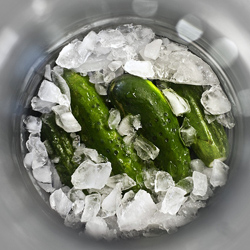
I found a compromise recipe of sorts, neither a fermentation nor a one-step pickle. My interest was piqued by method I’d never seen before: The cucumbers soak for 12 hours in a superchilled mixture of ice, water, and salt — a step that many sources say keeps the pickles crisp, even after processing in a boiling water bath. Although I’d discovered the recipe in a chapter titled “2-day Vegetable Pickles”, I realized that I could shave some much-needed time if I popped them in the icy brine before breakfast and processed the jars just before bedtime.
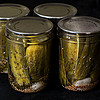
They may not be the fermented pickle of my dreams, but they’re pretty fabulous. The crisp spears offer a strong hit of garlic and a less-aggressive acidity than your typical homemade dills. Once our own cucumbers come in, I’m game to try another batch of the real fermented deal. But for now, I’m perfectly happy with my not-quite-kosher dills.
Ice-Brined Garlic Dill Pickles
– from the Ball Complete Book of Home Preserving
 8 lbs pickling cucumbers, gently washed & ends trimmed
16 cups crushed ice
1-1/4 cups pickling salt, divided use
12 cups water, divided use
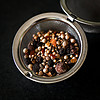
2T pickling spice
6 cups white vinegar
1/4 cup sugar
7 tsp yellow mustard seeds
10-1/2 fresh dill heads or 7T dill seeds (we used 7 sprigs fresh dill)
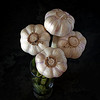
7 large (or 14 small) cloves garlic
– Day 1 (or early morning)
In a large clean crock (or tall ceramic, glass, or stainless steel bowl), layer the cucumbers and the ice.
In a large glass or stainless steel bowl, dissolve 1/2 cup of the pickling salt in 4 cups of the water. Pour over the cucumbers, adding enough cold water to cover the cucumbers, as needed. Place a large, clean inverted plate on top of the cucumbers and weigh down with two or three quart jars filled with water (and capped). Refrigerate or let stand in a very cool place for at least 12 hours, but no longer than 18 hours.
– Day 2 (or late evening)
Prepare canner, lids, and 7 pint jars according to the usual method; keep jars hot until needed.
Tie pickling spice in a square of cheesecloth (or use a tea-infusing ball).
In a large stainless steel saucepan, combine remaining 8 cups water, vinegar, remaining 3/4 cup pickling salt, sugar, and spice packet. Bring to a boil over medium-high heat, stirring to dissolve sugar and salt. Reduce heat, cover, and boil gently for 15 minutes, until spices have infused the liquid.
Transfer cucumbers to a colander placed over a sink and drain. Rinse with cool running water and drain thoroughly. Place dill and a garlic clove in each jar. Pack cucumbers into jars to within a generous 1/2 inch of the rim. Add 1 tsp mustard seed to each jar.
Using a stainless-steel canning funnel, pour hot pickling liquid into hot jars, leaving 1/2-inch headspace. Wipe rims and center lids on jars. Screw band to fingertip-tight.
Place jars in canner, ensuring they are completely submerged. Bring to a boil and process covered for 10 minutes. Remove canner lid; wait 5 minutes, then remove jars. Cool, check for seals, and store in a cool, dark place for up to a year.
CanJam, preserving & infusing, recipes
11 Comments »
Posted by Anita on 06.25.10 3:08 PM
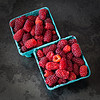
 Growing up in Southern California, no summer was complete without boysenberry-flavored treats like boysenberry pie, boysenberry ice-cream topping, and even boysenberry pancake syrup. Popularized by Walter Knott at his Buena Park farmstand — years before Knott’s Berry Farm morphed into Southern California’s second-fiddle amusement park — this blackberry-raspberry hybrid boasts large fruit and a tart-yet-sweet taste that brings together the best qualities of both its parents.
Sadly for us in Northern California, the boysenberries of my youth are highly perishable; they don’t travel well, and they need to be eaten or preserved within a day of being picked. I’ve only found them once locally, and their mushy texture and under-ripe flavor didn’t match up to my childhood memories. On our recent Los Angeles vacation, I nearly cried with nostalgia when I found a box of boysenberries at the Hollywood Farmers Market; I took them back to our vacation house and greedily popped them in my mouth like bonbons, knowing full well that they might be the only boysenberries I’d taste for a long, long time.
But boysenberries are just one of many varieties of blackberry-raspberry hybrids, and a number of their close cousins — including olallieberries, loganberries, and tayberries — grow well and abundantly here. Of the three, my favorite are the tayberries: large-ish berries with a heady, floral aroma that highlights their Rosaceae family ties to roses and plums. Less seed-riddled than raspberries, but more complex-tasting than domesticated blackberries, tayberries may well have stolen my heart away from the boysenberries of days past. (Absence may make the heart grow fonder, but a girl has her limits.)
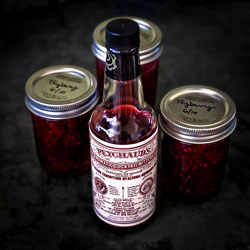
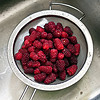
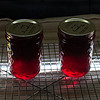
Anxious to preserve some of that mysterious tayberry flavor, I decided to make them the star of our entry for this month’s Berries/Cherries CanJam, hosted by Well Preserved. Tayberries’ spicy undertones and deep ruby-red color reminded me of the bottle of Peychaud’s bitters in our home bar, and the floral notes of both ingredients mix and mingle to make one heck of a summer preserve. Our first three-jar batch was so craveworthy, I made a beeline for the berry stand the very next weekend to make a few more jars.


Tayberry-Peychaud Preserves
– adaped from Blue Ribbon Preserves
7 cups whole, firm tayberries
6-1/2 cups sugar
1/2 tsp unsalted butter
3oz liquid pectin
2T Peychaud’s bitters
Prepare canner, lids, and seven 8-oz jars according to the usual method; keep jars hot until needed.
Gently rinse the berries, and drain well. (If berry seeds trouble you, you may want to mash half of the berries through a sieve.) Alternately layer the berries and half the sugar in an 8-quart pan; let stand for 30 minutes.
Gradually heat the berry mixture over medium-low heat until most of the sugar is dissolved, stirring to prevent sticking. Add the remaining sugar, a cup at a time, stirring between each cup. Heat until the sugar is completely dissolved, then stir in the butter.
Bring the mixture to a rolling boil over medium-high heat, stirring constantly. Stir in the pectin, return the mixture to the rolling boil, again stirring constantly. Boil while you stir for 1 minute. Remove the pan from the heat, and skim off any foam. Set aside for 5 minutes to help prevent floating fruit. Gently stir in the bitters and distribute the fruit.
Using a stainless-steel canning funnel, ladle preserves into hot jars, leaving 1/4-inch headspace. Wipe rims and center lids on jars. Screw band to fingertip-tight.
Place jars in canner, ensuring they are completely submerged. Bring to a boil and process covered for 10 minutes. Remove canner lid; wait 5 minutes, then remove jars. Cool, check for seals, and store in a cool, dark place for up to a year.
CanJam, preserving & infusing, recipes
11 Comments »
Posted by Anita on 04.23.10 4:53 PM
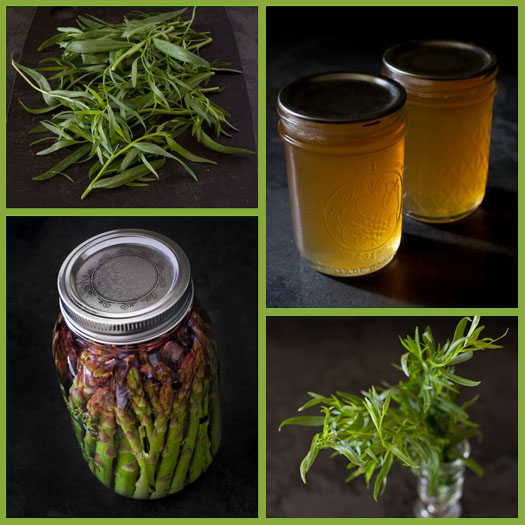
This month’s CanJam roundup — hosted by Marisa at Food in Jars — focuses on herbs, a fitting subject for a month when many canners have little fresh produce close at hand. Our garden is overflowing with herbs, but in the spirit of exploration I decided to make use of a big bunch of tarragon from our latest Mariquita Farm delivery. My only problem was deciding whether to make a sweet preserve or a savory pickle.
Eventually I rationalized that there will be plenty of time later in the year to put up fruit, and pondered the early spring crops I know I would be craving later. Top of that list is asparagus, so I started by using my herbal ingredient to flavor a batch of asparagus pickles. After all, béarnaise sauce — essentially a Hollandaise flavored with tarragon and shallots — and asparagus are natural partners.
Aside from the fiddly task of trimming each spear to the height of a quart jar, the pickled asparagus was simple enough. but I found myself with plenty of leftover tarragon. Rather than wait another week for the next farmers market to put up more asparagus, I rummaged around to see what else I had on hand that would pair well with this anise-scented herb. A quick turn through my canning books yielded a simple recipe for fresh herb jelly, using a base of dry white wine.
I didn’t want to crack a full bottle of vino to get the cup and a half I needed for the recipe, but I did have a half-bottle of bubbly leftover from a recent brunch; swapping in Champagne vinegar for the recipe’s white wine vinegar made the Champagne theme complete. The resulting preserve isn’t the sort of thing you’d spread on toast, or swirl into yogurt — at least to my palate. Much like other savory-sweet jellies (like popular ones that feature jalapeno or mint) this jelly works well as a companion to cheese and crackers, or as a condiment for roast meats.
Asparagus Pickles with Tarragon
– adapted from Jan Roberts-Dominguez, Eugene Register-Guard
2-3/4 cups white distilled vinegar
2-1/4 cups water
3T canning salt
2 sprigs tarragon, about 4 inches long
3 bunches tender asparagus, preferably thin stalks, washed
2 small shallots, peeled and partially split in half
2 garlic cloves, peeled and partially split in half
2 tsp mustard seed
2 tsp whole peppercorns
Prepare canner, lids, and two narrow-mouth 1-quart jars according to the usual method; keep jars hot until needed. 
In a medium saucepan, combine the vinegar, water, and salt over high heat.
Meanwhile, trim the asparagus of any white or tough ends, then cut to the height of the jars’ shoulders. (There are usually enough tender trimmings to make asparagus pesto.)
Divide the tarragon among the two jars, then pack the trimmed asparagus into the jars, along with 1 shallot and 1 clove of garlic per jar. Sprinkle in the mustard seed and peppercorns, then pour in the boiling brine, leaving 1/2-inch headspace. Wipe rims and center lids on jars. Screw band to fingertip-tight.
Place jars in canner, ensuring they are completely submerged. Bring to a boil and process covered for 10 minutes. Remove canner lid; wait 5 minutes, then remove jars. Cool, check for seals, and store in a cool, dark place for up to a year.
(For crisper spears, you can also make these as refrigerator pickles: Seal the jars after pouring in the brine, but do not process. Cool completely to room temperature, then store in the refrigerator for up to 3 months.)
—
Champagne Tarragon Jelly
– adapted from the Ball Complete Book of Home Preserving
2 cups loosely packed, coarsely chopped tarragon
1-1/2 cups sparkling wine
1 cup water
1 cup Champagne vinegar
1 packet powdered fruit pectin (1-3/4oz) *
5 cups granulated sugar
Prepare canner, lids, and five 8-oz jars according to the usual method; keep jars hot until needed.
Combine tarragon, sparkling wine, water, and vinegar in a large stainless steel saucepan. Bring to a boil over medium heat, then remove from heat and cover, steeping for 15 minutes. Stir well, pressing tarragon to extract flavor.
Pour the tarragon mixture through a dampened jelly bag (or a strainer lined with several layers of dampened cheesecloth) set over a deep bowl. Let drip, undisturbed and without squeezing, until all of the liquid has fallen from the tarragon. (At this point, you should have 3-1/4 cups liquid.)
Transfer the liquid to a clean deep stainless steel saucepan. Whisk in the pectin* until completely dissolved, then bring to a boil over high heat, stirring frequently. Add sugar all at once and return to a full rolling boil, stirring constantly. Boil hard, stirring, for 1 minute. Remove from pan from the heat and quickly skim off any foam as needed.
Using a stainless-steel canning funnel, pour hot jelly into hot jars, leaving 1/4-inch headspace. Wipe rims and center lids on jars. Screw band to fingertip-tight.
Place jars in canner, ensuring they are completely submerged. Bring to a boil and process covered for 10 minutes. Remove canner lid; wait 5 minutes, then remove jars. Cool, check for seals, and store in a cool, dark place for up to a year.
—
* If using Pomona’s Natural Pectin, use 3T pectin powder, and combine it with 1 cup of the sugar before proceeding.
CanJam, preserving & infusing, recipes
9 Comments »
Posted by Anita on 03.19.10 11:06 PM
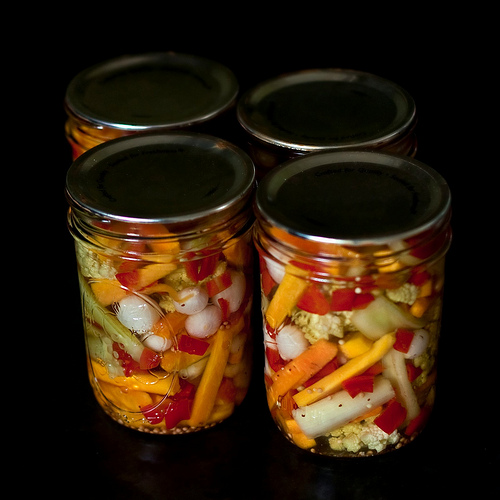 Trying to plan a suitable entry for this month’s CanJam — the theme is alliums — left us a little perplexed. It’s not that we haven’t been known to preserve onions: I’m a big fan of the bright-pink Yucatecan pickled onions served with cochinita pibil, and Cameron has a special fondness for English-style pub onions.
But because we prefer them very crisp, we usually make both of these recipes as refrigerator pickles. (Processing seals the jars and kills any lingering toxins, but it also cooks whatever’s in the jar.) Neither of us really cares for sweet condiments with our savory dishes, so onion jams were out.
Then it occurred to me: Giardiniera.
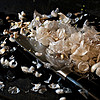
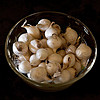
Now, strictly speaking, onions are just one of this Italian-style pickle’s many components, but the little devils take an ungodly amount of time to prep, way more than all of the other parts combined. First you have to slice off the hair-like root end, but oh-so-carefully so as to not dislodge the onion’s layers from one another. Then you have to peel each tiny onion — no mean feat when natural sugars keep papery skins adhered firmly to outer layers of the onion’s flesh — without cutting them in half or otherwise mangling them.
It’s a labor of love, I tell you, but it’s all worth it when you open up that first jar and taste. The onions are integral part of giardiniera, the linchpin of its piquant flavor.
Giardiniera means “gardener” in Italian, the implication being that this hodgepodge of different vegetables would be a great way to preserve the bounty of an active kitchen plot. But its traditional components — red peppers, carrots, celery, onions, and cauliflower — are never simultaneously seen in abundance in any garden I’ve ever known. Even in Italy, I think you’d be hard-pressed to find red peppers and cauliflower in the same patch. (I did a little research on how this seasonal impossibility got its start, and came up empty; if anyone knows how these ingredients ended up in a single pickle, I’d love to hear!)
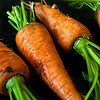
Other than the peppers, though, we’re able to get everything we need from our own garden, or nearby farmers, even in late winter. In place of the bell peppers, I used a bunch of skin-on piquillo peppers I’d stashed in the freezer last summer, but added them to the mixture just before portioning the cooked vegetables into the jars, to avoid softening them any further. Their texture wasn’t so hot, but they’re mostly there for color, anyway. Next year, I might just — shhh! — buy an imported pepper or two.
Giardiniera (Italian-style Pickled Vegetables)
— adapted from Sunset Canning, Freezing, and Drying
1/2 pound carrots*
1/2 pound celery*
2 red bell peppers
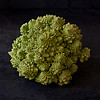
1 large cauliflower or romanesco
1 pound small white pearl onions
1 cup pickling salt
2 quarts white vinegar
1/4 cup mustard seed
2T celery seed
1 small dried hot pepper
1-1/2 cups sugar
Peel carrots, then cut into 1-1/2-inch by 1/4-inch sticks; you should have about 4 cups*. Remove strings from the celery, then cut into into 1-1/2-inch by 1/2-inch planks; you should have about 3 cups*. Stem and seed the peppers peppers, then cut into wide strips. Break the cauliflower into florets; trim the stems. Carefully peel the onions, leaving the root intact. Try not to swear.
In a very large bowl, dissolve the pickling salt in 4 quarts cold water. Add the vegetables to the brine, and refrigerate for 12 to 18 hours. Drain the vegetables, rinse in cold water, and drain again.
Prepare canner, lids, and 6 pint jars according to the usual method.
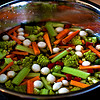
Combine the vinegar, mustard seed, celery seed, chili pepper, and sugar in a 6-quart stainless or enamel pan. Bring to a boil and continue to cook for 3 minutes. Add the vegetables, reduce heat to low, and cook for a few minutes until the vegetables just begin to soften. Remove from heat and discard the chili.
Using a funnel, pack vegetables into hot jars up to just shy of 1/2 inch of the rim. Ladle hot pickling liquid to cover vegetables, leaving 1/2-inch headspace.
Remove air bubbles and adjust headspace; wipe rims and apply lids and rings.
Place jars in canner, ensuring they are completely submerged. Bring to a boil and process covered for 5 minutes. Remove canner lid; wait 5 minutes, then remove jars. Cool, check for seals, and store in a cool, dark place for up to a year.
—
* Note: After reading comments from a friend and long-time reader, I suspect that my weight-to-volume measurements are incorrect here. Please see this comment and this follow-up.
CanJam, Italian, locavore, preserving & infusing
10 Comments »
